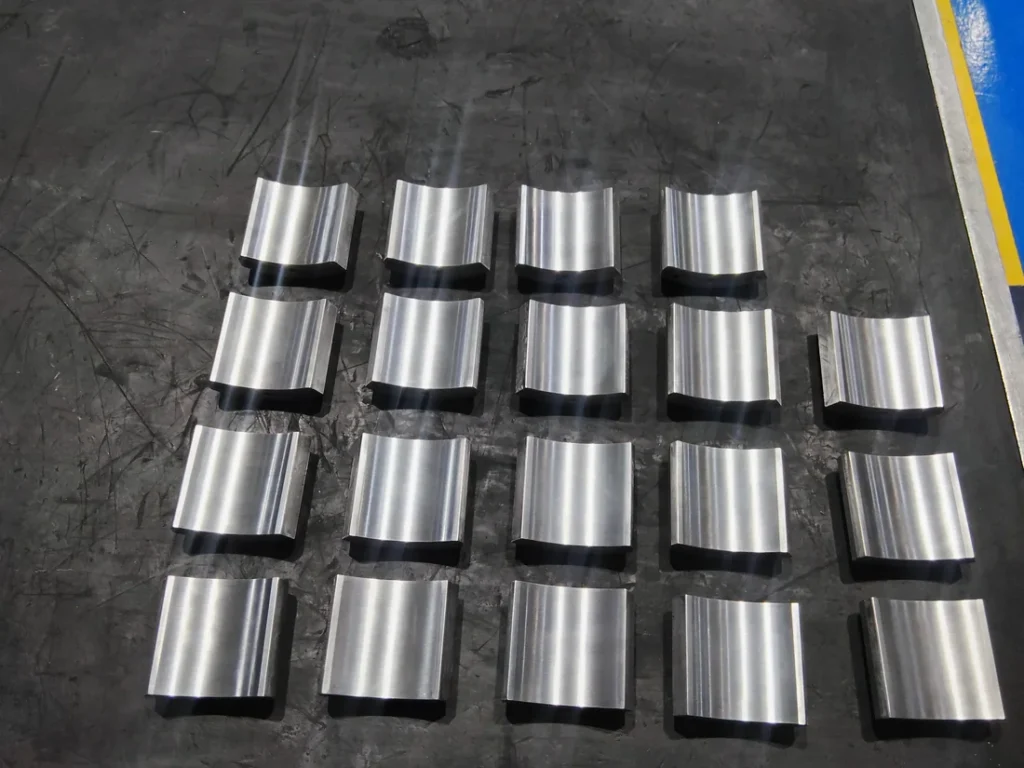
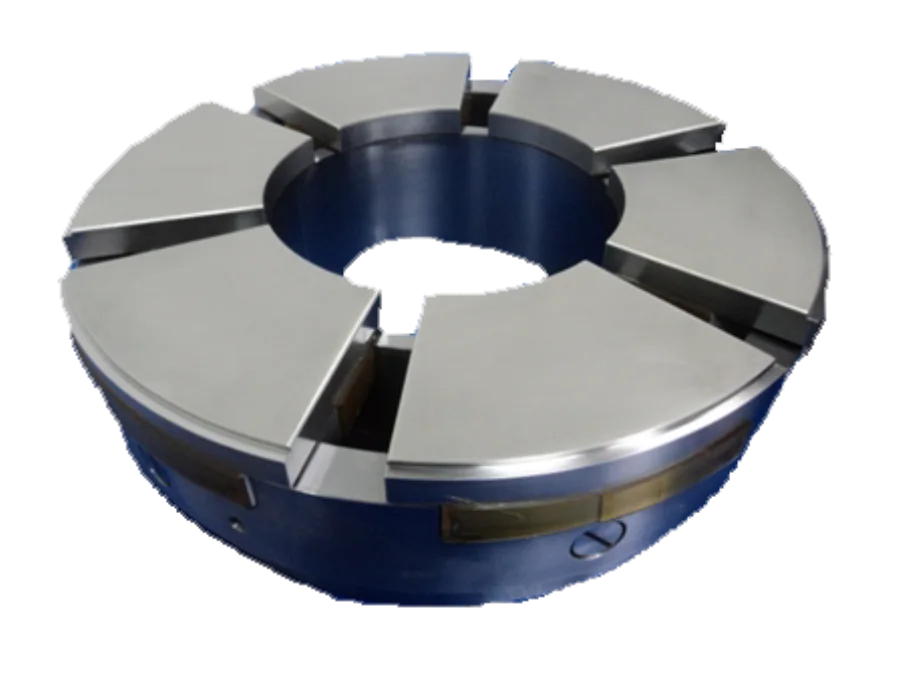
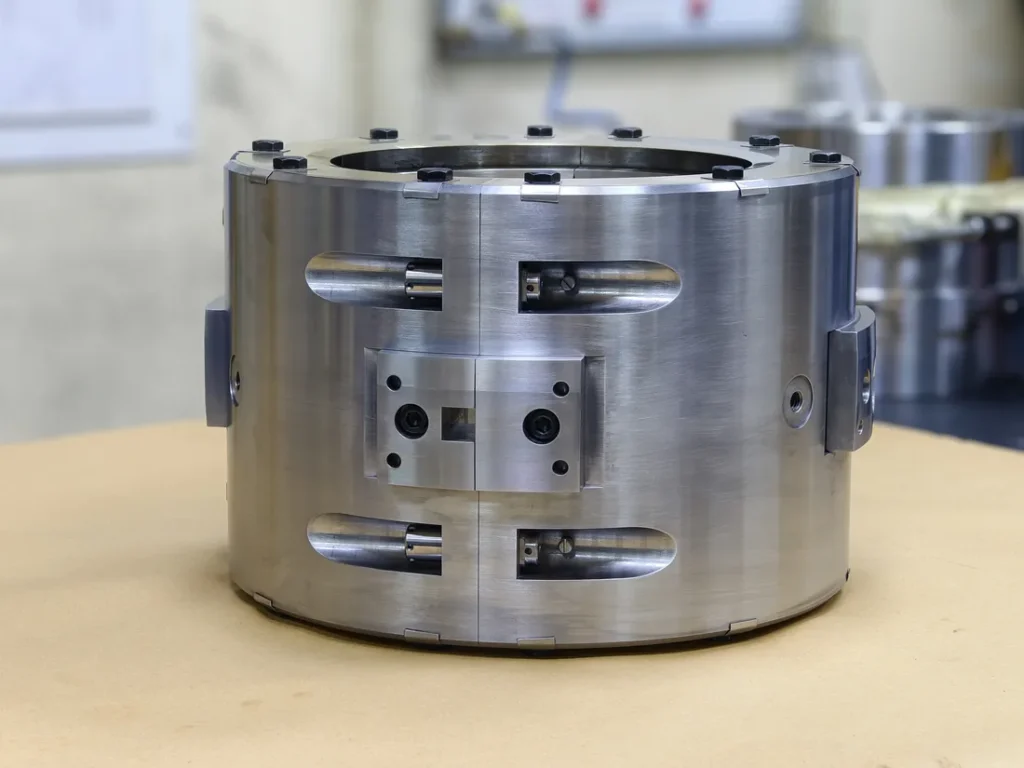
White Metal vs. Rolling-Element Bearings: Where Hydrodynamic Bearings Are Used
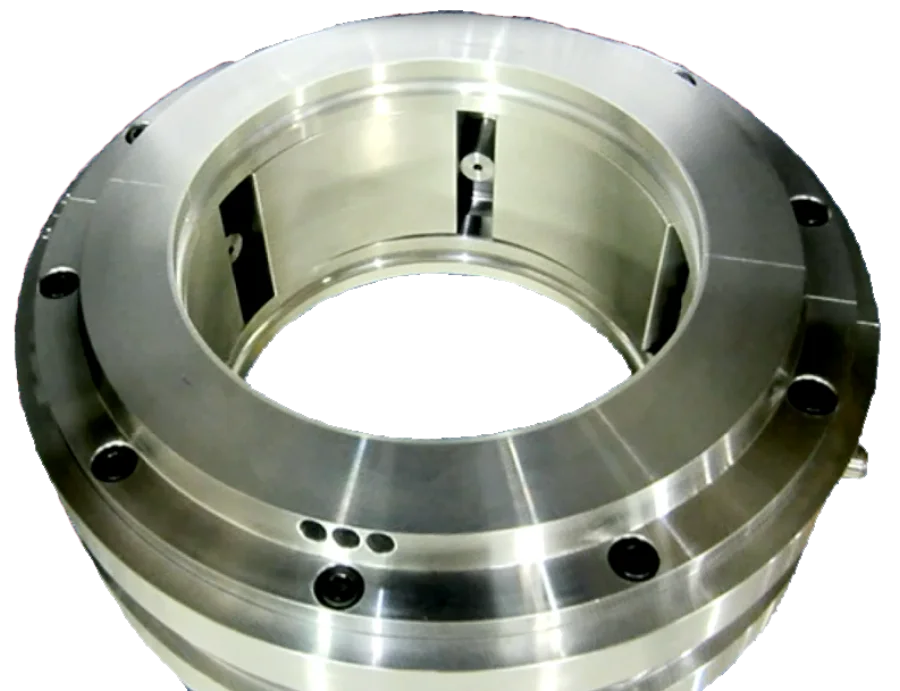
Most rotating equipment specifications arrive with the bearing type already chosen. When it doesn’t — or when a machine keeps failing on the bearing you inherited — the choice between a hydrodynamic white metal bearing and a rolling-element bearing is worth making deliberately. The two fail differently, cost differently over a machine’s life, and suit very different duties.
The basic difference
A rolling-element bearing carries load on hardened balls or rollers running between races. Metal touches metal, separated only by a thin elastohydrodynamic film. A hydrodynamic bearing carries load on a wedge of pressurised oil generated by the shaft’s own rotation. In steady running there is no metal-to-metal contact at all.
That single distinction drives almost everything else.
Where hydrodynamic wins
High speed and high load
Turbines, large compressors, generators and big pumps run at speeds and loads where rolling elements would suffer unacceptable contact stress and heat. The oil film in a hydrodynamic bearing gets stronger with speed, not weaker — the faster the shaft turns, the more effectively it drags oil into the converging wedge that supports it.
Effectively unlimited life
A rolling-element bearing has a calculable fatigue life; every revolution puts another stress cycle into the races. A hydrodynamic bearing running on a clean, correctly pressurised oil film has no such fatigue mechanism. Kept fed with clean oil and protected from start–stop wear, it can outlast the machine.
Damping
The oil film is a spring and a damper. That matters for rotor dynamics: hydrodynamic bearings absorb vibration and help a rotor pass through critical speeds. Rolling elements are comparatively stiff and transmit vibration into the housing.
It is repairable
This is the point most often missed on a whole-life cost sheet. A worn white metal bearing is not scrap. The Babbitt lining can be stripped and recast onto the original steel or bronze shell, remachined to drawing and returned to service. A spalled rolling-element bearing is replaced.
The white metal is designed to be the sacrificial surface. It protects the shaft — and it can be renewed without replacing the housing.
Where rolling elements still win
They are not obsolete. Rolling-element bearings are the right answer for lower speeds and lighter loads, for machines with no pressurised lubrication system, for frequent start–stop duty, and where a standard part off a shelf is genuinely adequate. Hydrodynamic bearings depend on an oil supply; lose lubrication and the film collapses quickly.
The start–stop caveat
A hydrodynamic bearing is most vulnerable at the moment of starting and stopping, when shaft speed is too low to build a film and the journal runs briefly on the white metal. Machines that start and stop constantly punish that. Machines that run continuously for months barely touch it. Duty cycle, not just load, should drive the decision.
Choosing in practice
Ask three questions:
- What is the surface speed and specific load? High values point firmly to hydrodynamic.
- Is there a pressurised lube system, and is it reliable? No system, no oil film.
- How often does the machine start? Continuous duty favours hydrodynamic; frequent cycling erodes its advantage.
If the answers point to hydrodynamic, the follow-on question is who makes and maintains them. Shaheen Arabia manufactures and repairs the full range of hydrodynamic white metal bearings — journal, thrust, tilting-pad, pressure-dam and combined — at our facility in Jubail, backed by an 8,000 working hours or one year, subject to applicable warranty terms, warranty.