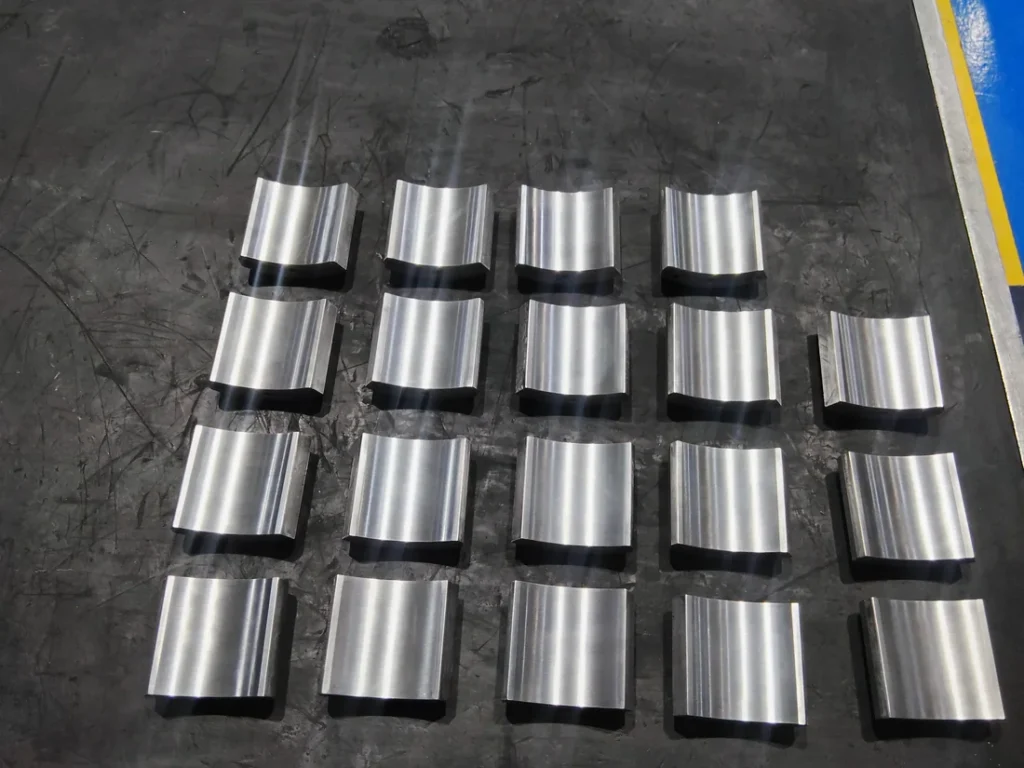
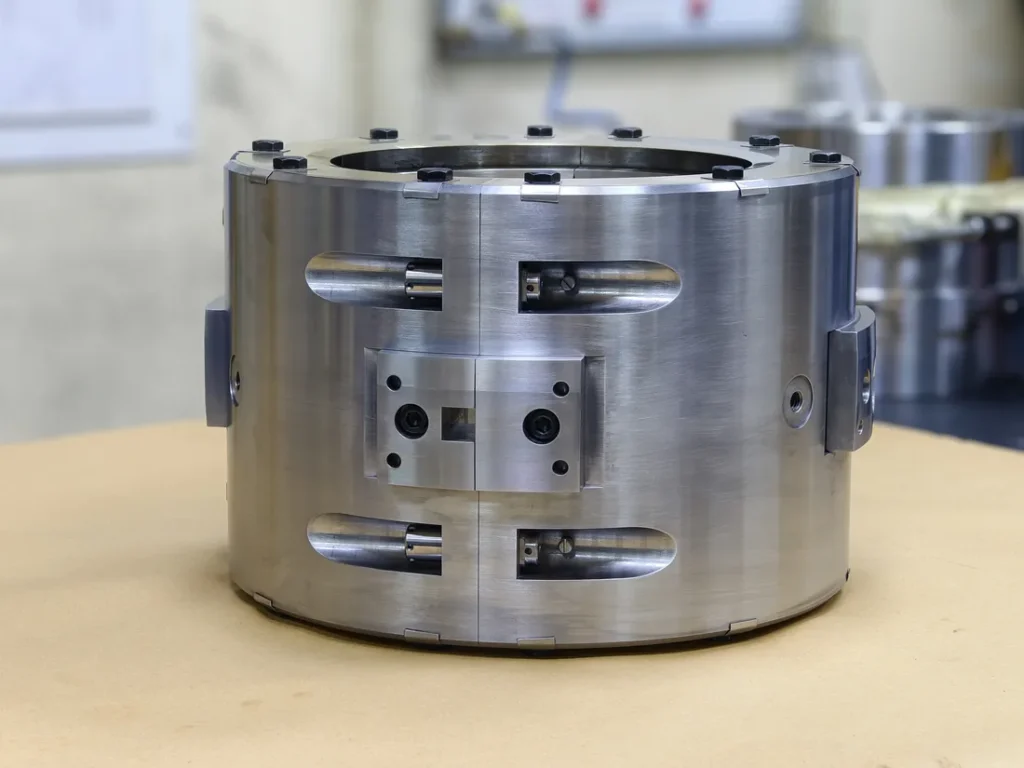
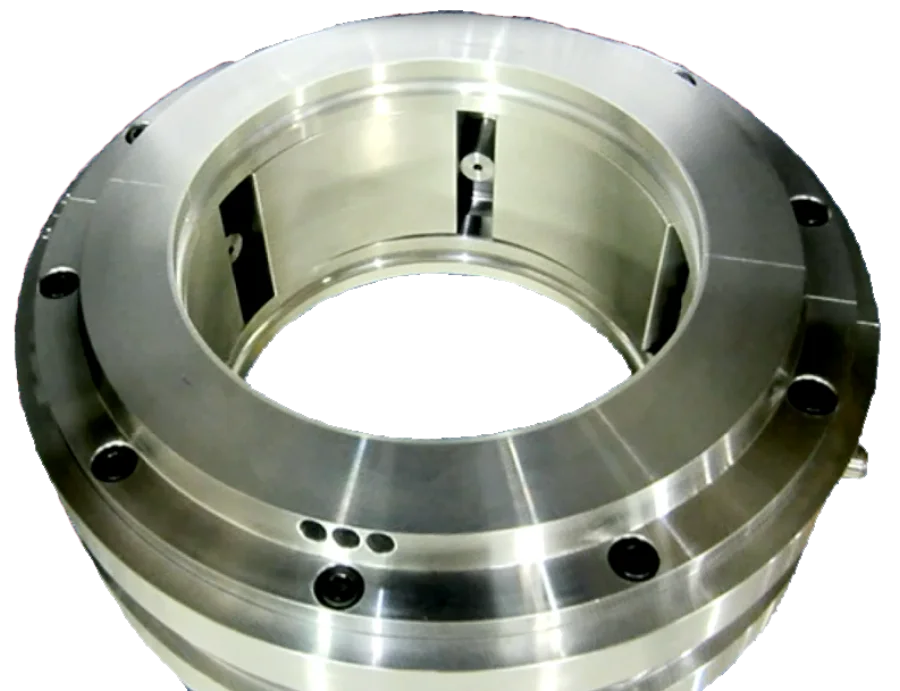
When to Refurbish or Replace a Turbine Bearing Component
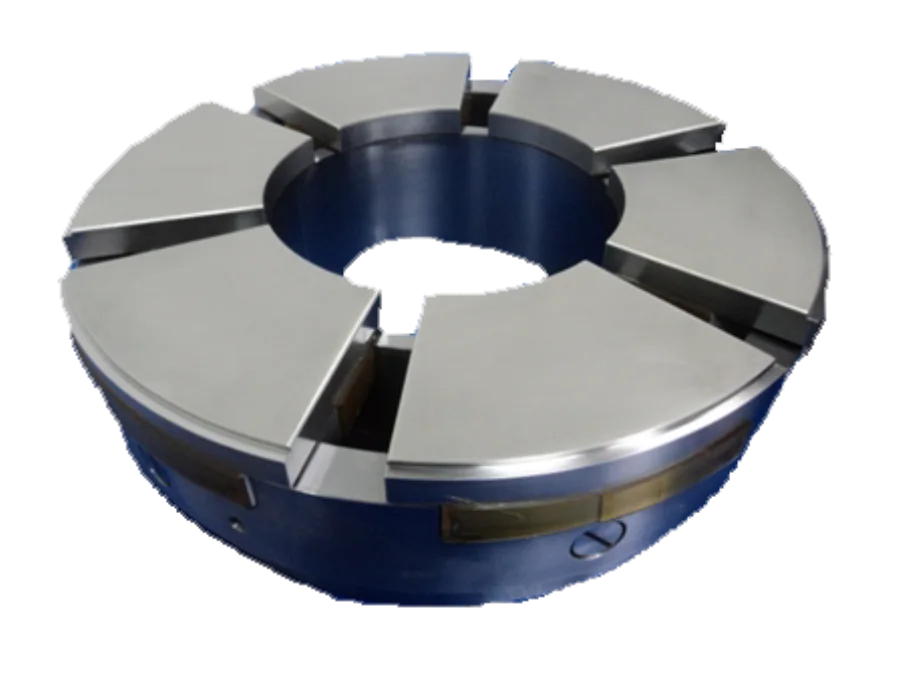
A failed turbine bearing rarely fails without warning, and rarely fails cheaply. The question maintenance teams face isn’t whether to act, but whether to repair the existing bearing or replace it outright. The right answer depends on three technical factors, and getting it wrong costs either money or uptime.
Start with the shell, not the lining
A white metal bearing is two components: a soft Babbitt lining and the steel or bronze shell carrying it. The lining is designed to wear — that is its job. The shell is not.
So the first inspection is of the shell itself. If it is sound, dimensionally correct and free of cracks, the bearing is almost always repairable: strip the lining, re-tin, recast, remachine to drawing. If the shell is cracked, corroded through, or has lost its interference fit in the housing, repair is not the right answer regardless of how the lining looks.
Wear in the white metal is expected. Damage to the shell is the thing that ends a bearing’s life.
Factor one: what actually failed
Normal wear
Gradual, even loss of clearance over years. Repairable, routinely.
Wiping
The lining has been smeared by metal-to-metal contact — usually a lubrication interruption or a start under load. If the shell survived and the shaft is undamaged, recasting restores the bearing. Investigate the root cause, or you will do it again.
Fatigue cracking
A crazed or cracked lining points at cyclic overload or a rotor-dynamic problem. Recasting will return the bearing to service, but the underlying load condition needs addressing.
Debonding
The lining has separated from the shell. Recasting is exactly the right fix — provided the shell is sound and the new bond is ultrasonically verified.
Corrosion or electrical pitting
Pitting from shaft currents or chemical attack usually indicates a problem outside the bearing. Fix that first.
Factor two: lead time against downtime
This is where the decision is usually actually made. An imported replacement bearing on a long lead time, for a machine that is down, is expensive in a way that dwarfs the bearing’s price. Locally repairing or remanufacturing the existing bearing is frequently faster than sourcing a new one from an international OEM — and for obsolete machines, it may be the only route at all.
Factor three: is the part still available?
For older equipment the honest answer is often no. When a bearing is obsolete, the options are repair the one you have, or have a replacement reverse-engineered from the physical sample as an exact duplicate or an improved design.
A practical decision path
- Inspect the shell. Cracked, corroded through or dimensionally lost — replace or remanufacture.
- Inspect the shaft/journal. Damage there changes the job entirely and must be addressed alongside.
- Identify the failure mode. Wear, wiping and debonding are repair candidates. Fatigue and pitting are symptoms — treat the cause.
- Compare real lead times, not list prices.
- Confirm what you get back. A repaired bearing should return with the same verification as a new one.
What a proper repair includes
A recast bearing should come back ultrasonically bond-tested with a certificate of bonding, machined to drawing, dimensionally inspected, and covered by the same warranty as new — in our case 8,000 working hours or one year, subject to applicable warranty terms. If a repair carries a shorter warranty than a new part, ask why.
We manufacture and repair the full range of hydrodynamic bearings at our Jubail facility.