Why Custom Carbide Tools Can Outperform Standard Tools in Difficult Applications
In an ideal world a standard tool would suit every machining need. In reality, the precision of tooling specifications and specialised applications often means ready-made tools don’t exist, or don’t perform. Knowing when to stop forcing a catalogue tool and specify a custom one is worth real money.
The symptoms of the wrong tool
You are usually paying for a tooling mismatch long before anyone calls it that:
- Tool life measured in a handful of parts rather than a shift
- Reduced feeds and speeds “because the tool won’t take it”
- Two or three operations doing what one profile could do
- Secondary finishing to correct what the tool left behind
- Consistent chipping at the same point on the cutting edge
Each of those is a recurring cost, and none of them shows up on the tool’s purchase price.
Where custom carbide earns its place
Hard and exotic materials
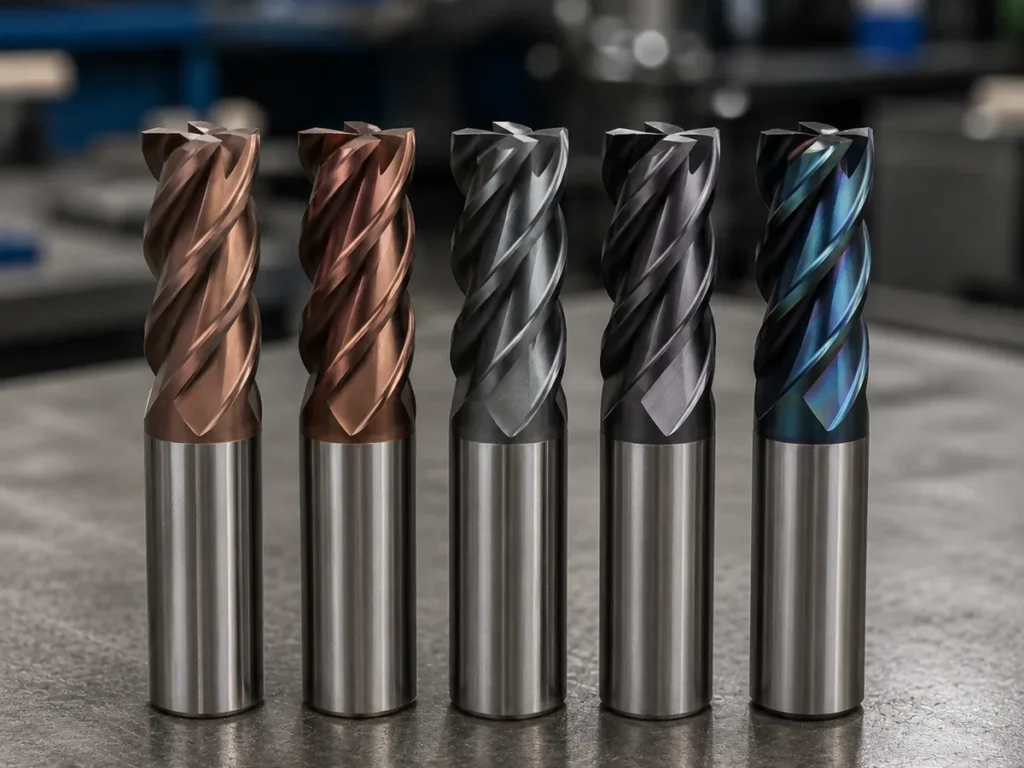
Duplex stainless, hardened steels and application-specific alloys punish general-purpose geometry. Substrate grade, coating and edge preparation matched to the actual material make the difference between a tool that survives and one that work-hardens the cut and dies.
Non-standard geometry
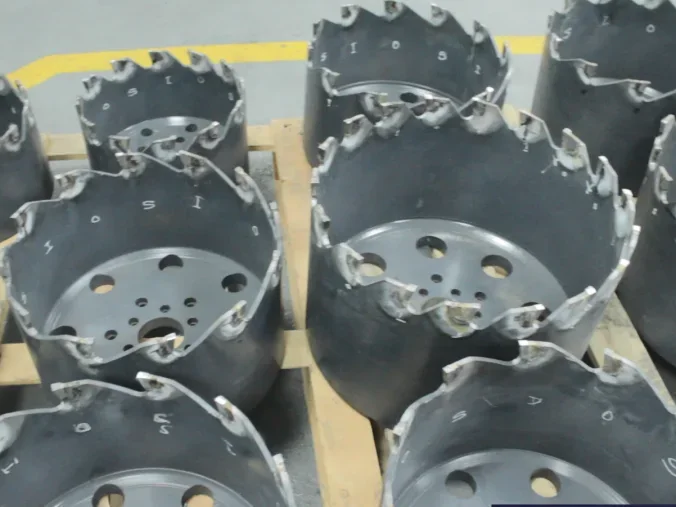
When the feature isn’t standard, the tool shouldn’t be. A form cutter that produces a profile in one pass replaces a sequence of operations, and removes the accumulated tolerance stack of doing it in stages.
Combining operations
A step drill that drills and counterbores, or a profile cutter that roughs and finishes, removes a tool change and a setup. On volume work this is usually the largest saving available.
Designing the right tool for the application and material doesn’t just solve a supply problem — it reduces manufacturing time and increases output.
The tool simply doesn’t exist
Obsolete equipment, unusual pipe sizes, bespoke assemblies. Here custom manufacture isn’t an optimisation, it’s the only route.
The lead-time objection
The usual argument against custom tooling is that it takes too long. That assumes international supply. Manufactured locally, bespoke carbide and brazed tools avoid international shipping and customs clearance, which can shorten lead times considerably — and that changes the calculation from “custom is a last resort” to “custom is a normal option”.
Cost per part, not cost per tool
A custom tool costs more to buy. Judge it on cost per part instead, and include:
- Parts produced per edge
- Cycle time at the feeds and speeds the tool actually allows
- Operations and setups eliminated
- Scrap and rework avoided
- Regrinds available before the tool is consumed
That last point matters: a carbide tool is not single-use. Regrinding restores it to usable geometry at a lower cost than a new tool, so the purchase is spread over several tool lives.
What to bring
You don’t need a tool drawing. The material and condition, the feature and tolerance, the machine and its limits, and what the current tool is doing wrong are enough to start. Bring a worn sample and it is enough on its own.
Shaheen Arabia designs and manufactures carbide and brazed cutting tools to application and material at our Jubail facility.