

Reverse Engineering Obsolete Industrial Components: A Practical Guide
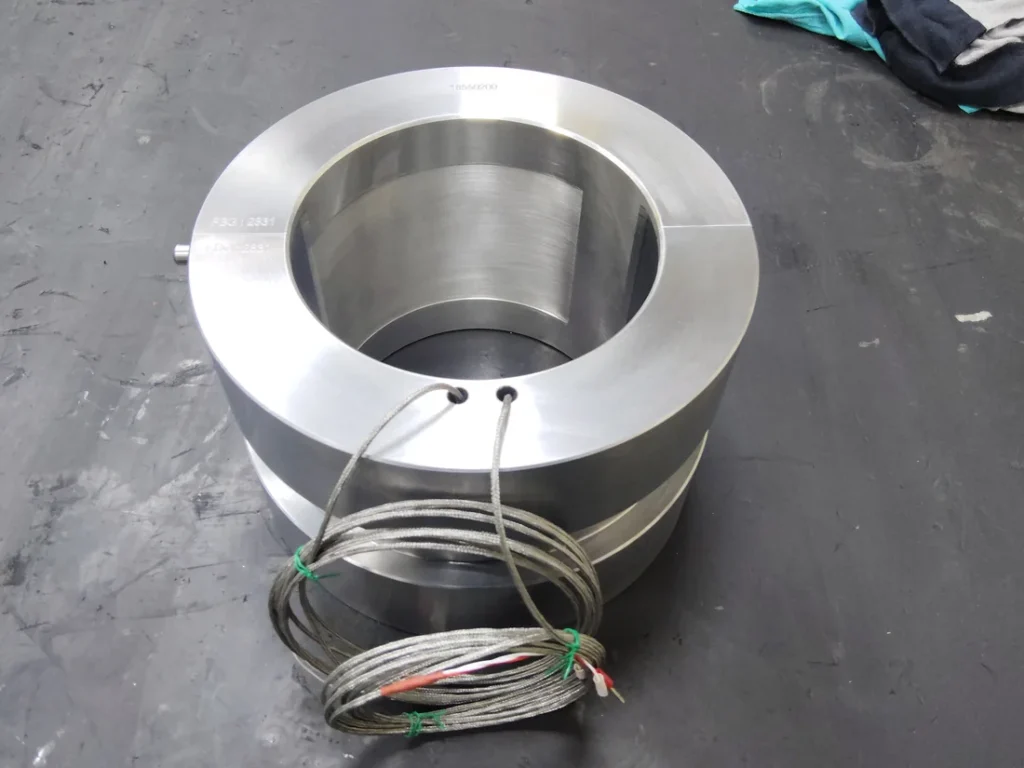
Sooner or later a critical machine needs a part nobody sells any more. The OEM has discontinued it, been acquired, or simply won’t quote a single unit. Reverse engineering — producing a replacement from the physical part itself — is the practical answer, and it is far more disciplined than “copying” suggests.
When reverse engineering is the right call
- The part is obsolete and no longer supplied
- Lead time on the original would keep a plant down unacceptably long
- The original had a known weakness worth designing out
- Only a drawing-less sample exists, and no documentation survives
It is not the right call where a part is currently available at sensible lead time, or where a proprietary design is protected — always confirm you have the right to reproduce a component.
Step one: capture the geometry
The worn part is not the part you want to copy. Its dimensions include wear, and reproducing them faithfully reproduces the failure.
So capture starts with careful measurement — dimensional inspection and CMM work — then separates as-designed geometry from as-worn condition. Wear surfaces are compared against unworn datum features to reconstruct the original intent.
Measuring a worn part accurately is easy. Deciding which of those measurements were ever intended is the actual skill.
Step two: establish the material
Geometry alone is half the job. A component that matches dimensionally but not metallurgically will fail differently and often sooner. Material identification, hardness and any surface treatment all have to be established, then matched to an available specification.
Step three: recover the tolerances
A drawing carries tolerances; a physical part carries only actual sizes. Fits have to be inferred from function — what runs, what is fixed, what seals, what carries load. Getting this wrong produces a part that measures correctly and still doesn’t work: too tight and it seizes, too loose and it fails early.
Step four: decide duplicate or improve
Once the design is understood, there is a choice. An exact duplicate is right when the original performed well and the failure was simply service life. An improved design is right when the part failed prematurely, or when a better material or geometry is now available. Both are legitimate; the decision should be explicit, not accidental.
Step five: manufacture and verify
The reproduced part is manufactured, then inspected against the reconstructed drawing — visual, dimensional, ultrasonic and where requested dye-penetrant, with final certification before dispatch under an ISO 9001:2015 system. Verification matters more here than on a catalogue part, because there is no OEM certificate standing behind it.
What to send
The physical sample is the essential item, even damaged. Beyond that: which machine it came from and its duty, the failure mode and how long it lasted, any drawing fragments or nameplate data, and whether you want a duplicate or an improvement.
Shaheen Arabia reverse-engineers replacements for rotating equipment components and cutting tools, as exact duplicates or improved designs. Send us the sample through the RFQ form, or read more about our machining capability.